

The teenage years bring opportunities for growth, but they can also come with academic pressure, social challenges, changing relationships, and intense emotions. Sometimes, finding the right words to explain those feelings is difficult.
Art journaling offers another way to express what is happening inside. By combining drawing, writing, painting, and collage, teens can create a personal space to explore emotions and reflect on everyday experiences. No artistic experience is necessary, and the pages do not need to look a certain way.
What Is Art Journaling?
Art journaling combines visual expression with personal reflection. Unlike a traditional diary, which primarily uses words, an art journal can include colors, shapes, photographs, symbols, and written thoughts.
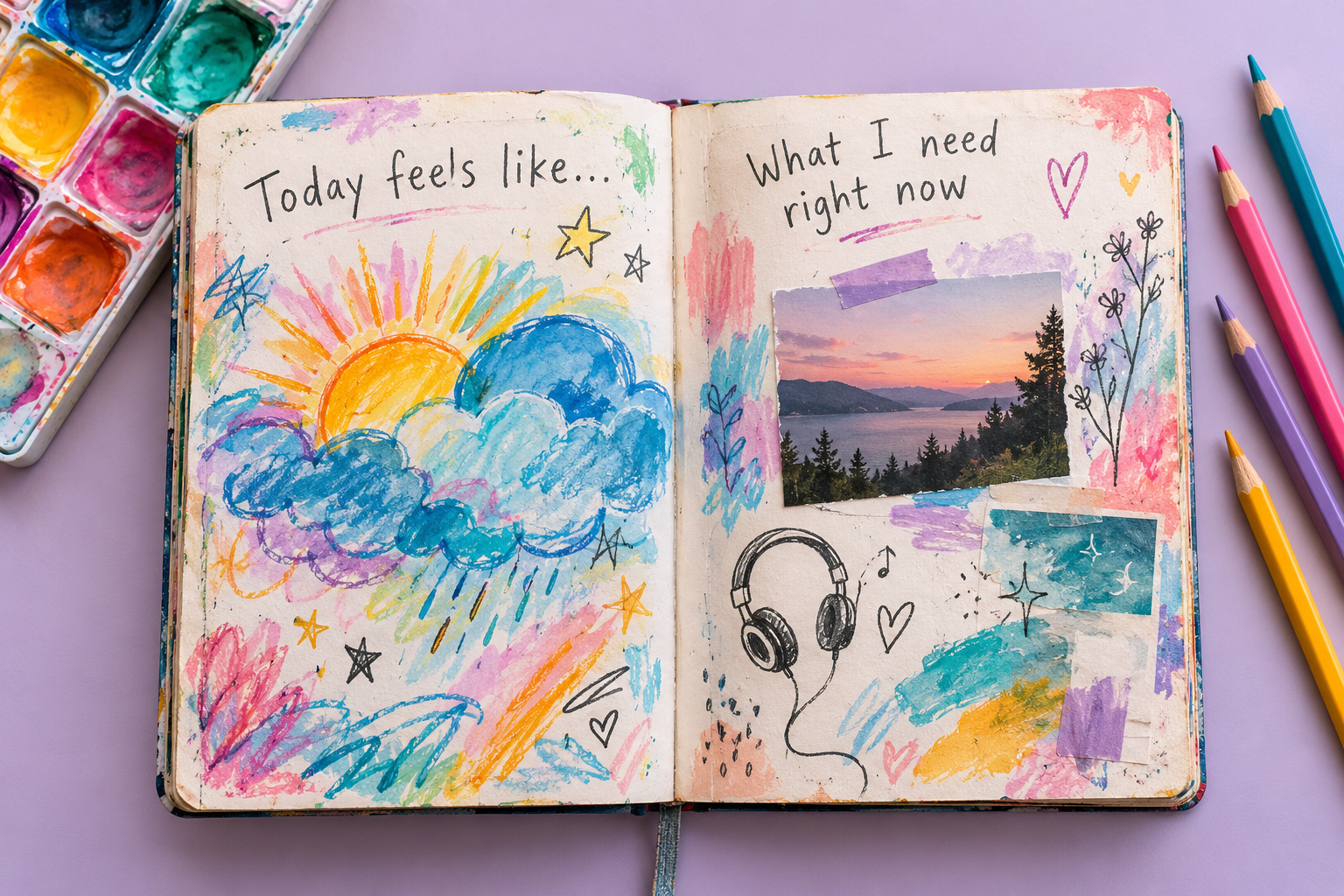
A teenager might sketch their mood, create a collage about their interests, write a poem about a difficult day, or fill a page with abstract patterns. Some entries may be colorful and detailed. Others may contain only a few lines or a single word.
The purpose is to make room for self-expression rather than create a polished piece of artwork.
5 Ways Art Journaling May Support Teen Mental Health
1. Offers Another Way to Express Emotions
Feelings such as sadness, anger, loneliness, and anxiety can be difficult to explain. Art journaling gives teens an alternative starting point.
A teen might use tangled lines to represent frustration, contrasting colors to show mixed feelings, or images that capture something they cannot yet put into words. They can decide whether to reflect privately or use a page to begin a conversation with someone they trust.
Adults should let teens explain their own artwork rather than assigning meaning to particular colors or images.
2. Creates a Pause During a Stressful Day
Between schoolwork, extracurricular activities, and social expectations, teenagers may have few moments without a task to complete or a screen to check.
Doodling, painting, or arranging collage materials can offer a break from those demands. Some teens may find the process calming; others may simply enjoy having a few minutes to make something without being graded.
Keep expectations flexible. Five minutes with a notebook can be enough, and journaling does not need to become a daily commitment.
3. Encourages Self-Awareness
Adolescence is a time of exploring identity, independence, relationships, and personal values. An art journal can give teens space to consider questions such as:
What matters to me?
When do I feel most like myself?
What has been difficult lately?
What am I proud of?
What would I like more support with?
Looking back at previous entries may help a teen notice recurring feelings, changing interests, or moments of personal growth. There is no requirement to review old pages if they would rather keep creating and move forward.
4. Helps Teens Explore Coping Options
An art journal can become a place to collect reminders of what helps during difficult moments.
A coping page might include favorite songs, grounding activities, encouraging words, or the names of trusted people. A teen could also divide a page into “What I’m feeling” and “What I need” to explore possible next steps.
Journaling is one possible coping tool. Teens may also benefit from movement, rest, supportive relationships, time outdoors, and professional mental health care when needed.
5. Makes Room for Positive Experiences
Art journaling does not have to focus only on difficult emotions. Teens can also use it to capture meaningful relationships, small accomplishments, funny moments, and experiences they want to remember.
A gratitude page might include a photograph, a drawing of a favorite place, or three small things that made the day easier.
The goal is to make room for positive experiences while still allowing difficult feelings to exist. Teens do not need to turn every challenging experience into a lesson or find something positive before they are ready.
Easy Art Journaling Ideas for Teens
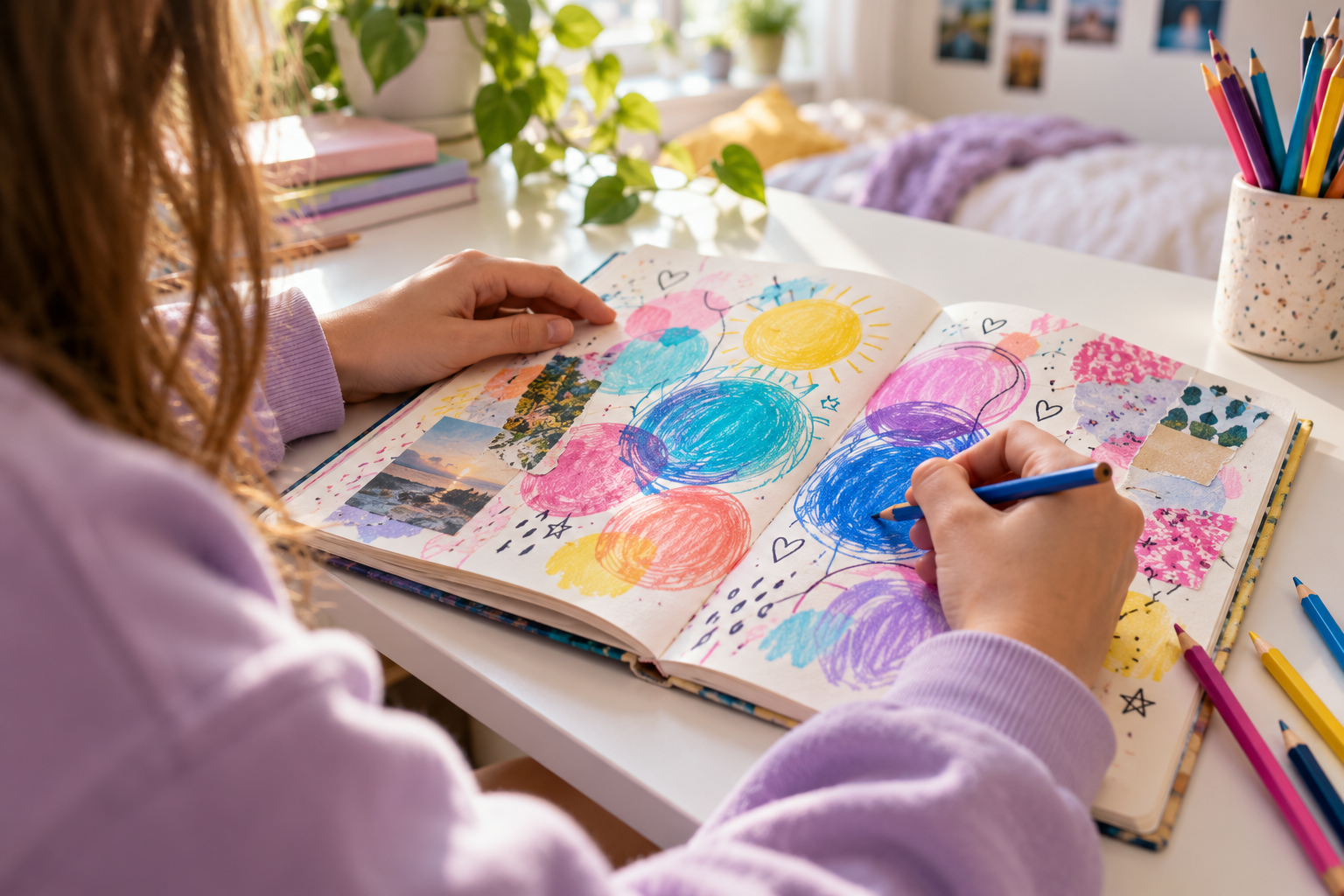
Getting started does not require expensive supplies. A notebook, pencils, markers, glue, and recycled magazines are enough. Choose materials that feel comfortable and easy to use.
Try one of these prompts:
Mood mapping: Use colors, shapes, or symbols to represent how you feel today.
A worry page: Write or draw a concern, then add one manageable next step or someone you could ask for support.
A comforting place: Create an image of a real or imagined place where you feel more at ease.
A strengths collage: Collect words and images that represent your interests, strengths, and values.
A letter to yourself: Combine a personal note with illustrations or encouraging messages.
Free doodling: Fill a page with lines and patterns without planning the result.
Things that help: Make a visual reminder of people, activities, and routines that offer support.
Start with whichever idea feels most approachable. A page can remain unfinished, and a teen can change direction whenever they want.
Place the colorful open-journal image here.
How Parents and Educators Can Help
Adults can support art journaling by making materials available and giving teens control over how they use them.
Offer an invitation rather than an assignment: “Would you like a notebook or some art supplies?” may feel more welcoming than asking a teen to draw their feelings.
Respect their privacy and let them choose whether to share. Avoid grading the artwork, correcting its appearance, or demanding an explanation. If a teen does share a page, try asking, “Would you like to tell me about this?” or “Would you like me to listen or help you think something through?”
Journaling should feel flexible. If a prompt increases distress, it is okay to stop, choose a lighter activity, or reach out to a trusted adult or therapist.
Is Art Journaling the Same as Art Therapy?
Self-guided art journaling can be a creative wellness activity. Professional art therapy takes place within a therapeutic relationship with a trained art therapist, who helps tailor the process to a person’s needs and goals.
An art journal may be used during therapy, but making art independently is not the same as receiving art therapy. The American Art Therapy Association distinguishes recreational and self-care art activities from professional art therapy services. Learn more about art therapy.
If a teen is experiencing ongoing sadness, anxiety, withdrawal, or changes that interfere with school, relationships, sleep, or everyday activities, a mental health professional can help assess what support may be useful.
Teen Therapy and Art Therapy in Reston and Arlington
At Sage House Therapy, we offer counseling and art therapy for teens and families in Reston and Arlington, Virginia. Creative approaches can provide another starting point for teens who find it difficult to talk about their experiences.
Whether your teen enjoys art or has never considered themselves creative, our team can help you explore an approach that fits their needs.
Contact Sage House Therapy to learn more about teen counseling and art therapy.