

Divorce can bring big changes to a child’s life, from new living arrangements to different family routines. Alongside these changes, children may experience sadness, anger, confusion, relief, or several feelings at once. They might need reassurance that the divorce is not their fault and that managing adult relationships is not their responsibility.
Talking can help, but words are not always easy to find, especially for younger children. Art therapy offers another way for children to explore their experiences and feel supported during a family transition.
What is Art Therapy?
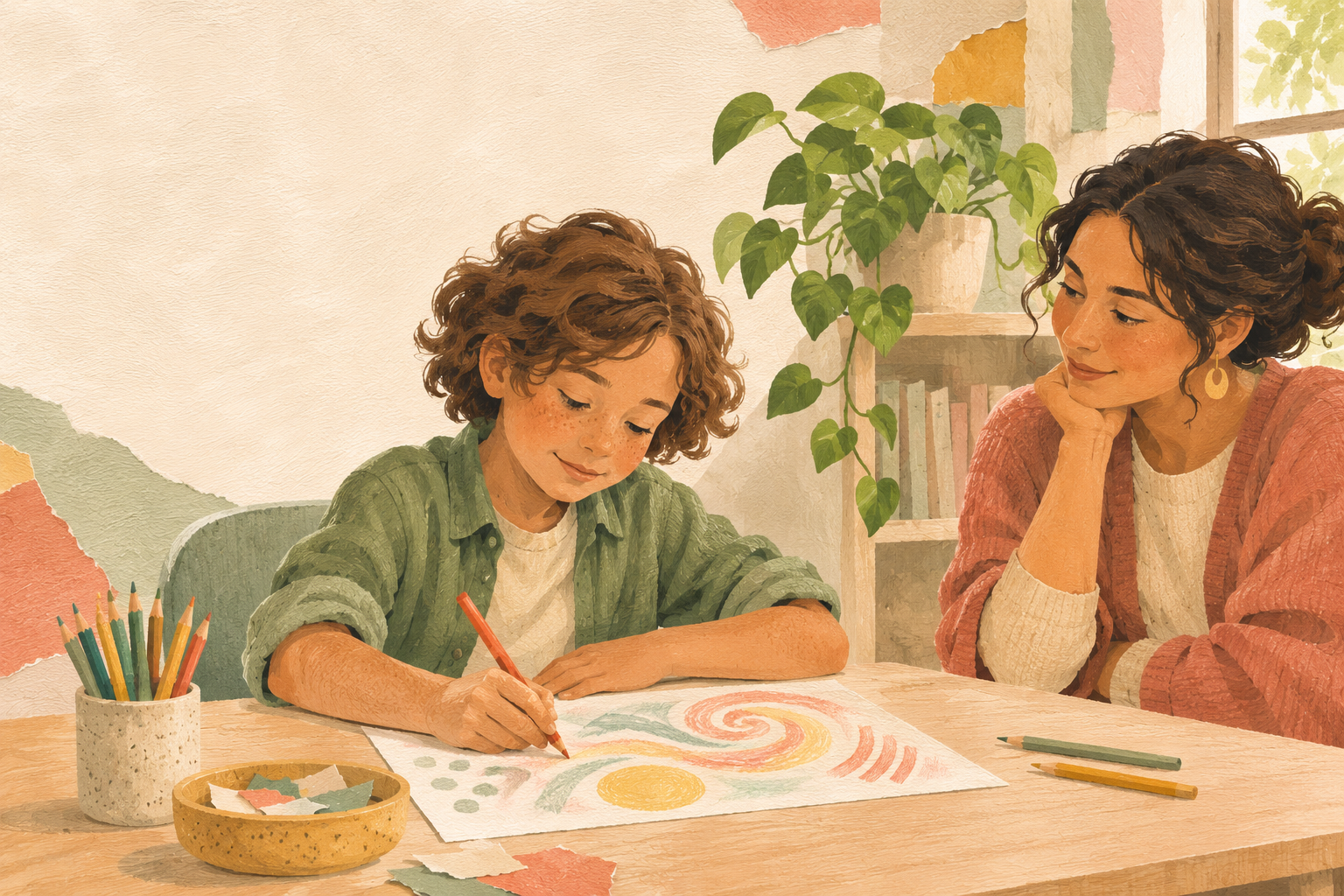
Art therapy combines creative expression with mental health care provided by a trained, credentialed art therapist. Children may use drawing, painting, collage, or clay to communicate feelings, explore experiences, and develop coping skills within a therapeutic relationship.
Unlike an art lesson, the focus is not on technique or creating an impressive finished piece. What matters is the process: making choices, exploring materials, and discovering ways to express what is happening inside.
Art-making at home can be meaningful, but it is not the same as professional art therapy. Clinical art therapy includes individualized goals and guidance from a qualified practitioner.
Making Space for Feelings That Are Hard to Explain
During a divorce, a child’s feelings may not fit neatly into one category. They may miss a parent while feeling angry with that parent, enjoy parts of a new routine while wishing things could return to the way they were, or feel unsure about what comes next.
In art therapy, these feelings can have room to exist together. A child does not have to produce a clear explanation or choose the “right” emotion. Colors, shapes, images, and stories can become starting points for expression. Children can choose what to share, with words or through the creative process, at their own pace.
What Sessions May Look Like
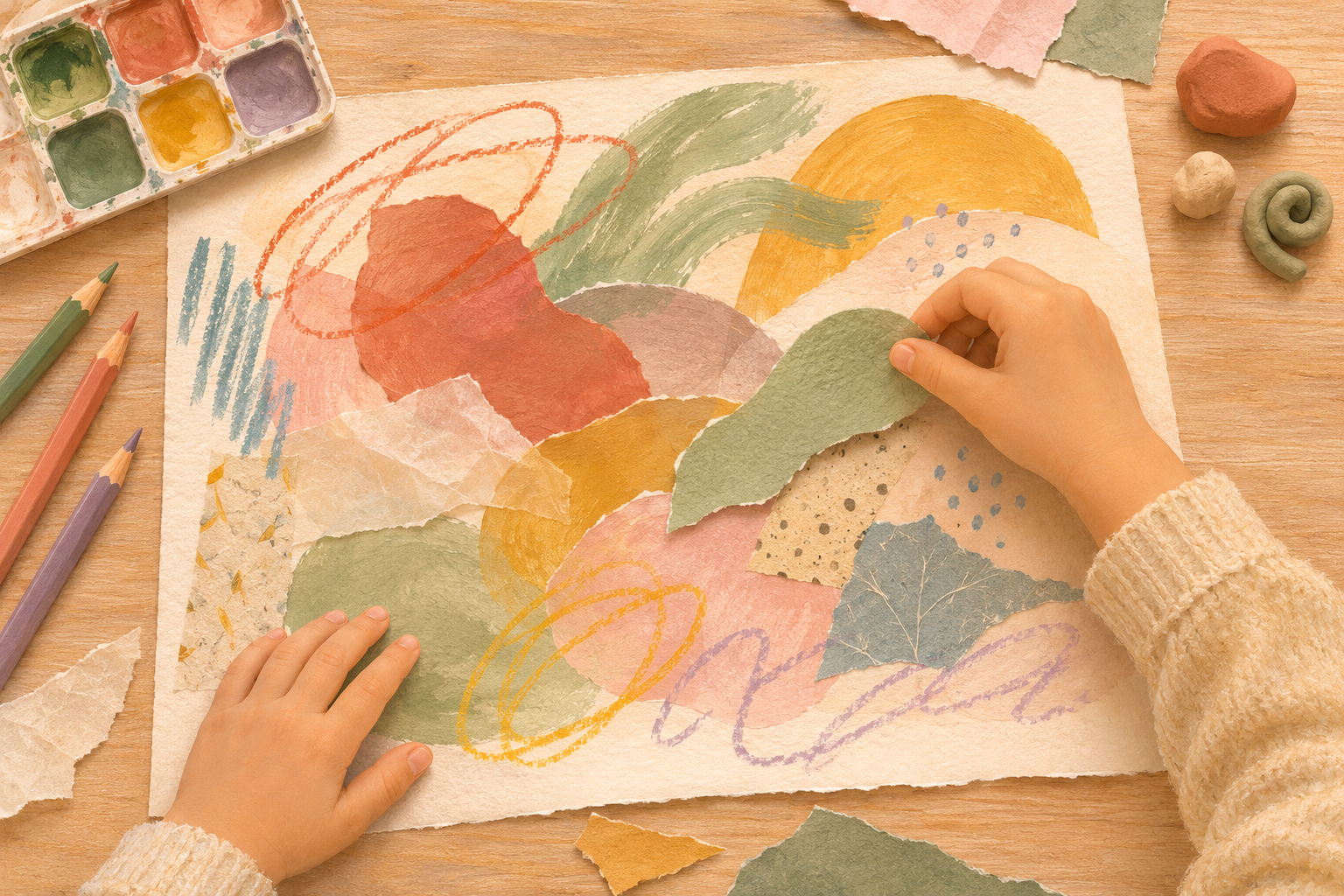
Art therapy sessions vary according to a child’s age, interests, needs, and treatment goals. Some sessions may involve open-ended exploration of materials. Others may include an invitation to create something related to change, relationships, personal strengths, or a sense of belonging.
A child might create an imaginary place, develop a character navigating something unfamiliar, or make an abstract picture without telling a story at all. There is no required image of divorce and no expectation that every session will focus directly on family changes.
The therapist’s role extends beyond offering materials. They provide support, attend to the child’s responses, and help connect creative exploration with the goals of treatment. The emphasis remains on understanding the child, not judging the artwork.
Depending on the child’s needs, sessions may also include practicing ways to recognize feelings, ask for support, and cope with changes in everyday routines.
Room for a Changing Story
Divorce changes a family’s structure, but it does not define a child’s whole experience. Alongside loss and uncertainty, there may still be connection, curiosity, enjoyment, and hope.
Art therapy offers a setting where those experiences do not have to compete with one another. A child can make room for what hurts and what feels good, for what has changed and what still matters, without feeling responsible for putting the family back together.
Finding Support for Your Child
If your family is navigating divorce or separation, Sage House Counseling & Art Therapy can help you explore whether counseling or art therapy may be a good fit for your child. Contact our team to learn more about our child and family services.