

Bringing a new life into the world is often painted as a time of joy, cuddles, and heartwarming firsts. But for many new parents, it can also be a time of fear, sadness, intrusive thoughts, and overwhelming emotions that feel too big to handle. If you're experiencing this—or someone you love is—please know you're not alone, and what you're feeling is real. Postpartum mood disorders like depression, anxiety, and OCD are more common than we often talk about, and thankfully, help and healing are absolutely possible.
Baby Blues or Something More?
It’s normal to feel a little “off” after having a baby. Up to 80% of new moms experience the “baby blues,” which often include mood swings, crying spells, irritability, and anxiety, especially during the first two weeks postpartum (O’Hara & McCabe, 2013). These feelings are generally mild, short-lived, and resolve on their own.
But if your symptoms persist beyond two weeks, worsen over time, or begin to interfere with your ability to function or bond with your baby, it might be more than the blues.
Here’s how to tell the difference:
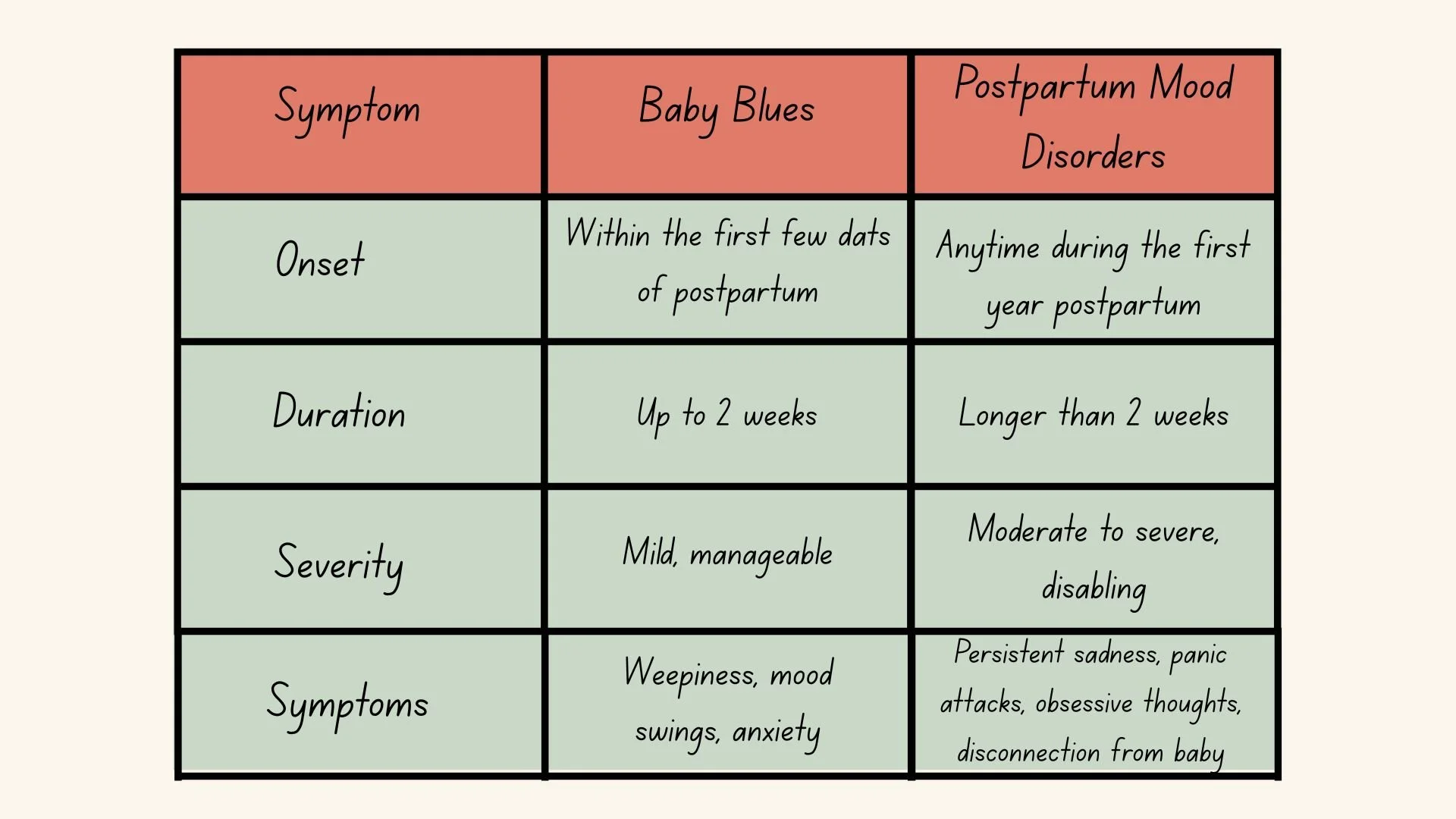
If you’re unsure, it's always best to check in with a mental health provider. You don’t need to “wait and see” when it comes to your mental health.
Understanding the Different Faces of Postpartum Mental Health
Postpartum Depression (PPD)
Affects roughly 1 in 7 women and 1 in 10 partners after childbirth (Centers for Disease Control and Prevention [CDC], 2020). Symptoms include persistent sadness, feelings of worthlessness, loss of interest in once-enjoyed activities, fatigue, and difficulty bonding with the baby.
Postpartum Anxiety (PPA)
Affects about 10-15% of new mothers (Fairbrother et al., 2016). It can cause constant worry, racing thoughts, difficulty sleeping (even when the baby sleeps), and physical symptoms like a racing heart or nausea.
Postpartum OCD (PPOCD)
Characterized by intrusive, unwanted thoughts or images—often about harm coming to the baby—and compulsive behaviors aimed at preventing those fears. These thoughts are distressing, but importantly, people with PPOCD do not want to act on them. This condition affects 3-5% of new moms (Miller et al., 2013).
These conditions can overlap and often go undiagnosed because many new parents are afraid of being judged or labeled. However, reaching out for help is a courageous, essential first step.
Why Treatment Matters
Left untreated, postpartum mood disorders can lead to long-term consequences for the parent and the baby. PPD and anxiety can impair bonding, reduce breastfeeding duration, and increase the risk of developmental and emotional issues in children (Stein et al., 2014). It can also strain relationships and increase the risk of chronic depression.
Most importantly, you deserve to feel well and whole. Parenthood is challenging, yes, but it shouldn’t feel impossible or hopeless.
Paths to Healing: Talk Therapy and Art Therapy
Talk Therapy
Cognitive Behavioral Therapy (CBT) and Interpersonal Therapy (IPT) are both evidence-based treatments for postpartum mental health disorders. CBT helps challenge distorted thoughts and develop healthier coping strategies, while IPT focuses on improving relationships and support systems (Sockol, Epperson, & Barber, 2011). Even a short course of therapy can lead to significant relief.
Art Therapy

Art therapy provides a non-verbal outlet for expressing the deep and often confusing emotions surrounding new parenthood. Creative expression can reduce anxiety, improve mood, and help parents reconnect with their identity outside of caregiving. A study by Kaimal et al. (2016) found that just 45 minutes of art-making significantly lowered cortisol (stress hormone) levels.
Even simple activities like painting, journaling, or collage can become powerful tools for healing. You don’t need to be “artistic”—you just need to show up for yourself.
How Partners Can Help
Partners can play a crucial role in the recovery process. Here’s how:
Educate Yourself: Learn about the signs and symptoms of postpartum disorders so you can offer informed support.
Be Present and Listen: Sometimes, just holding space without offering solutions can be incredibly healing.
Encourage Professional Help: Gently suggest therapy and offer to help with scheduling or finding providers.
Share the Load: Help with feedings, diapers, household chores, and baby care. Rest can be transformative.
Take Care of Your Own Mental Health: Partners can also experience postpartum depression. Support goes both ways.
Community Resources
You are not alone. There are many communities and organizations offering support:
Postpartum Support International (PSI) – www.postpartum.net
Offers a 24/7 helpline, support groups, and therapist directories worldwide.The Motherhood Center – www.themotherhoodcenter.com
Provides intensive outpatient services, therapy, and support groups.2020 Mom – www.2020mom.org
Advocates for maternal mental health policy and provides education resources.Moms Mental Health Initiative – www.momsmentalhealthmke.org
Peer support and stories from moms who’ve been there.
You Deserve Support
Postpartum depression, anxiety, and OCD are not character flaws or parenting failures. They are medical conditions, and they are treatable. If you're struggling, know this: there is hope, there is help, and you are deeply worthy of healing.
You are doing the most important job in the world—and you don’t have to do it alone.