

5 Creative Coping Skills for Anxiety
Anxiety doesn’t always come with a warning. It can show up as a pit in your stomach, sweaty palms, or a racing heart. It can make you feel stuck, wanting a way out but not knowing where to turn.
When anxiety is present, your body may shift into a fight-or-flight response: a system meant to protect you from perceived danger. While this response is protective, it can leave you feeling overwhelmed.
If you or someone close to you has experienced this, you are not alone. An estimated 19.1% of U.S. adults had an anxiety disorder in the past year, according to the National Institute of Mental Health. Anxiety is not something to be ashamed of; it is something that can be managed. Creative coping skills can be an accessible place to start.
Breathing
When you’re feeling big emotions like anxiety, it can help to focus on what you can control. Your breathing is often a good place to begin getting grounded.
1. Visual Box Breathing
Box breathing is a deep-breathing technique that can help calm the body’s stress response. Find a box shape in the room, such as a notebook, picture frame, or tissue box. Slowly count to four as you breathe in through your nose, tracing one side of the square. Hold your breath for a count of four while tracing the next side. Exhale for four while tracing the third side. Then hold for four, with your lungs comfortably empty, while tracing the final side. Repeat for a few breaths, adjusting the count if needed to stay comfortable.
2. Physiological Sigh
A physiological sigh is a breathing technique that may help when your breathing becomes shallow, rapid, or tense. Take one inhale through your nose, filling your lungs most of the way. Follow it with a second, shorter inhale through your nose. Then release the air through a long, slow exhale through your mouth. Repeat for a few breaths, without forcing your breathing.
Art Journaling
Journaling can help get anxious thoughts out of your head and onto paper. You can write, or combine journaling with art-making. Scribbling, doodling, or drawing what you are feeling can offer a way to express anxiety.
3. Scribble Drawing
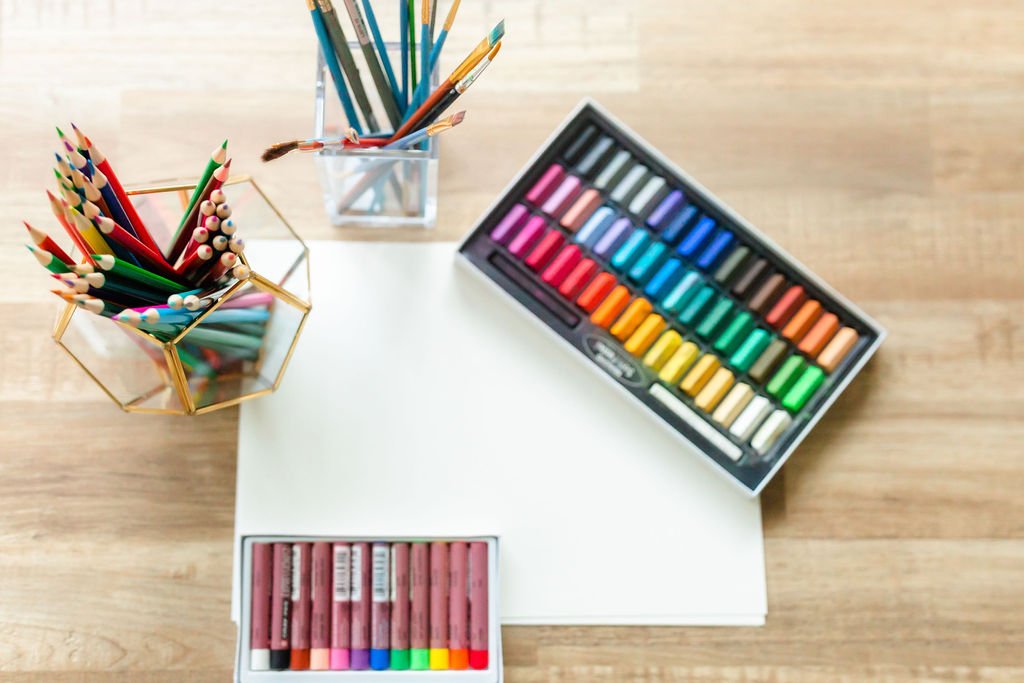
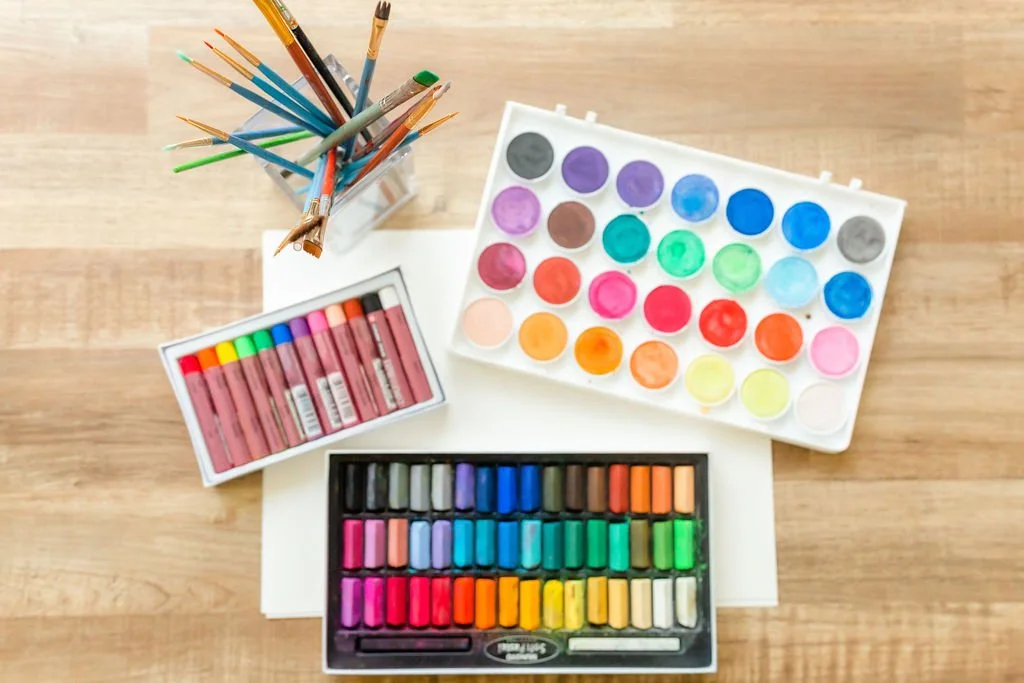
Gather a piece of paper or notebook and a coloring material such as markers, colored pencils, or crayons. Draw a loose scribble to represent your current anxiety. Is it chaotic? Jagged? Full of edges? Keep your eyes open or closed, depending on your comfort level. Once the scribble is complete, outline or fill in its shapes with colors that represent safety and comfort, bringing your attention back to the present moment.
4. Rhythmic Dot Release
Rhythmic Dot Release is an art-journaling prompt built around a repeated movement. Take a pen or marker—or a dot marker if you have one—and a piece of paper. Keep your eyes open, or gently close them if that feels comfortable. Tap the paper to make small dots, focusing on the tap-tap-tap sound. Cluster the dots to represent anxiety, then let them spread naturally across the page as you settle into the rhythm.
Movement Strategy
5. Progressive Muscle Relaxation
Progressive muscle relaxation can help you notice and release physical tension. Find a comfortable position sitting or lying down, and take a few slow breaths. Starting with either your feet or your face, gently tense one muscle group for 5 to 10 seconds as you inhale, then exhale and release. Notice the difference before moving to the next group. You can work through the feet and toes, calves, thighs and hips, abdomen, shoulders and neck, and face—or reverse the order. When you finish, pause and slowly open your eyes if they were closed. Keep the tension gentle and skip any area that feels painful.
Explore Support Through Therapy
Creative coping skills can be useful, but you do not have to manage anxiety on your own. If you would like to learn more about these techniques or explore support through therapy, contact Sage House Therapy. We would be glad to help you consider your next step.