

Recently, the Sage House Therapy team met up to learn and explore the ancient Japanese art of suminagashi (paper marbling) and see what insights might bubble up in the process!
There’s something inherently poetic about therapists learning an art form that literally means “floating ink.” As we soon discovered, suminagashi isn’t just about creating beautiful patterns. It’s about slowing down, embracing imperfection, and letting go of control- themes that felt right at home with our team of counselors, social workers and art therapists.
What Is Suminagashi?
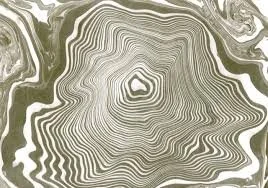
Suminagashi (pronounced soo-mee-nah-gah-she) originated in Japan over a thousand years ago, making it the oldest known form of marbling. Artists used it to decorate paper, books, and even poetry scrolls. The process is simple, meditative, and a little bit magical: drops of ink are gently placed on the surface of water, where they float and expand into delicate rings. With a light breath, a brush, or even a subtle ripple, the rings shift and swirl, forming dreamlike patterns. Once the design feels “just right”, (or at least “perfectly imperfect”!) a sheet of paper is laid on top, capturing the floating design in an instant.
It’s art that can’t be repeated. Every print is one of a kind, and every moment spent watching the ink move is a small lesson in mindfulness.
Legend has it that suminagashi was discovered quite by accident. Long before anyone thought of it as “art,” a young apprentice was cleaning soot from cooking pots and rinsing it into a basin of water. He noticed the soot drifting and swirling across the surface, creating delicate patterns that seemed almost alive. When he laid a piece of paper on top, the design transferred like magic. The soot, once used simply to coat rice paper and keep insects away, became the unexpected spark for a timeless art form- proof that sometimes beauty begins in the most ordinary of moments.
Learning to Let Ink Lead the Way
Our workshop began with a brief introduction to the history and philosophy of suminagashi. We learned that traditional artists often saw it as a reflection of the balance between control and surrender. It is a dialogue between the artist’s hand and the natural movement of water. In other words, it’s less about “making something happen” and more about noticing what unfolds.
Then came the fun part: the ink. Each of us received two brushes and we dipped one in the black ink, while the other we dipped in water with a pinch of soap. Following our instructor’s demonstration, we dipped alternating drops onto the surface of our trays. The ink spread outward in soft concentric rings, each one expanding gently until it met the next. Before long, our trays looked like miniature galaxies.
While usually talkative, our team for much of the hour were quiet, entranced by the hypnotic movement of ink on water!
Why People Practice Suminagashi
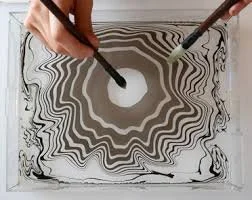
While suminagashi is visually stunning, it’s also deeply calming. The rhythm of dipping ink and watching it float engages a kind of relaxed attention that’s similar to meditation. It invites you to pause, breathe, and notice the way the ink expands, the ripples that form from your breath, the way colors merge in ways you didn’t expect.
Many people practice suminagashi today not just as an art form, but as a mindful or therapeutic practice. It can reduce stress, quiet busy thoughts, and encourage reflection, both on paper and within. For therapists, artists, or anyone who spends a lot of time in their heads, it’s a refreshing reminder that beauty can emerge without control or precision.
Suminagashi as Therapy: The Art of Floating with Feelings
As art therapists, we couldn’t help but connect the experience back to the work we do with clients. The process of watching ink drift and merge feels like a visual metaphor for emotions; always shifting, impossible to grasp fully, but beautiful in their flow.
In art therapy, suminagashi can be used to help clients explore concepts like letting go, trust, and acceptance. Because the artist has limited control over how the ink behaves, it becomes an opportunity to practice flexibility and patience. It can also serve as a gentle entry point for self-expression, especially for those who feel intimidated by traditional drawing or painting.
One of our favorite moments from the workshop came when a team member noticed how the water reflected her own mood: “When I tried too hard to make it perfect, the ink sank. But when I relaxed, it floated beautifully.” We all nodded — therapists recognizing a metaphor when we hear one.
From Ink to Insight
By the end of the workshop, the room was covered with dozens of marbled papers, each one completely unique. Some looked like landscapes, others like clouds or waves. We admired them laid out side by side- tangible reminders that creativity, like healing, doesn’t follow a straight line!
In the End, It’s About the Process
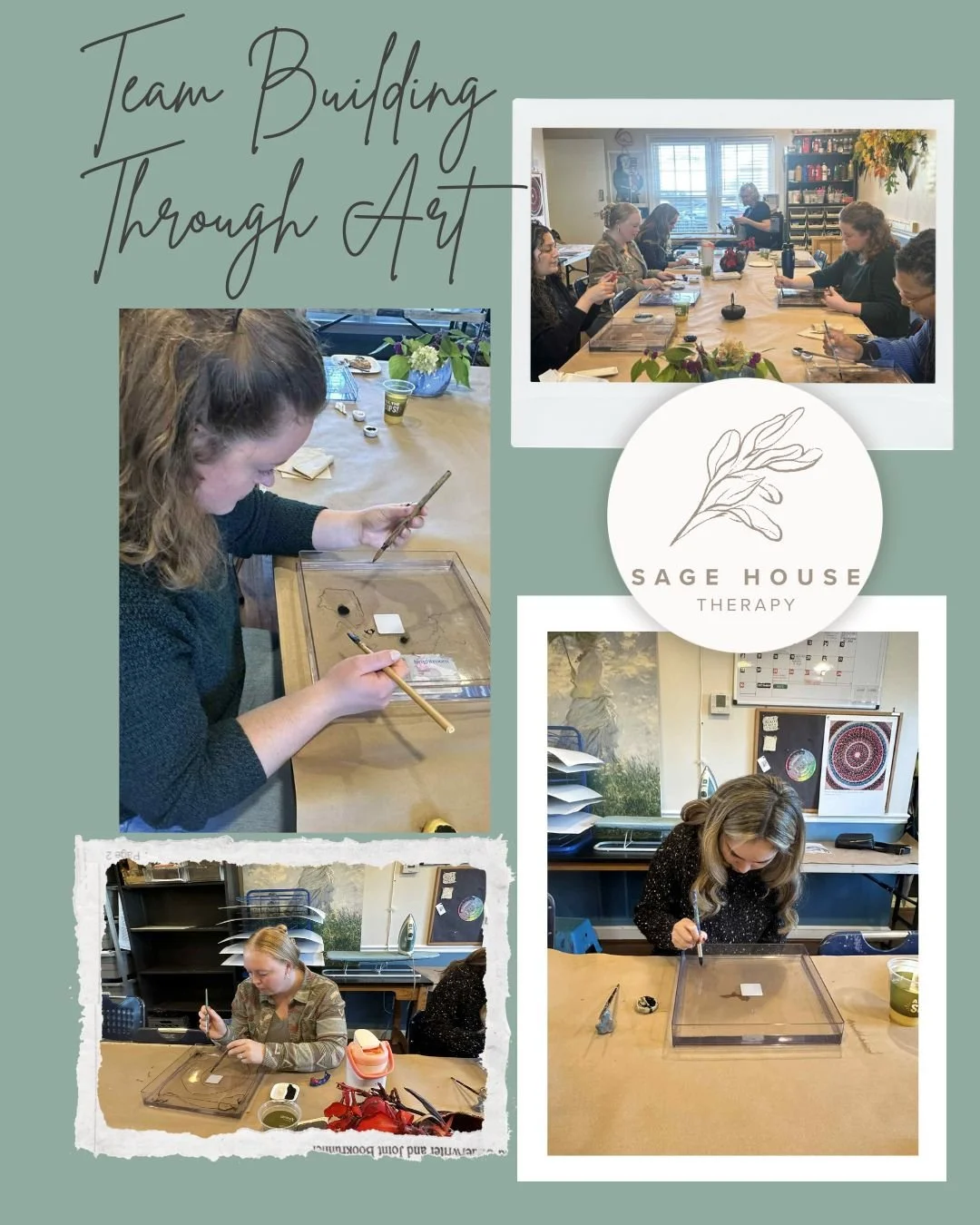
Our suminagashi experience wasn’t just a creative break from routine. It was a shared practice in mindfulness and connection together as a team. We laughed, we spilled a little ink and water and we left with a renewed sense of calm and inspiration.
In the gentle dance of ink and water, we found something quietly profound: a mirror of the therapeutic process itself. Fluid, unpredictable, and always capable of creating beauty when we let things flow.
Thank you to our wonderful workshop host, Art House 7! We encourage your to check out their fun class and workshop offerings!
If this sounds like something you want to learn more about reach out to us! We would love to share how art therapy (and the principles of suminagashi!) could be helpful in your therapy journey!